There’s not much point dehydrating beautiful homegrown produce, carefully grinding it into powder, putting it into a jar… and then leaving it sitting on the pantry shelf looking pretty. Powders should be used.
That’s become something of a mission for me lately. I love dehydrating produce because it’s such a practical way of dealing with abundance, but preserving the food is only half the story. The really interesting part is working out what to do with it afterwards.
I’ve already turned dehydrated lime zest into a smoky lime seasoning. I’ve made a KFC-esque chicken seasoning, combining some of my homemade powders with spices that simply make more sense for me to buy in bulk. Now I’m turning to something a little unexpected. Powdered plums.
Plum Powder Isn’t Necessarily Sweet
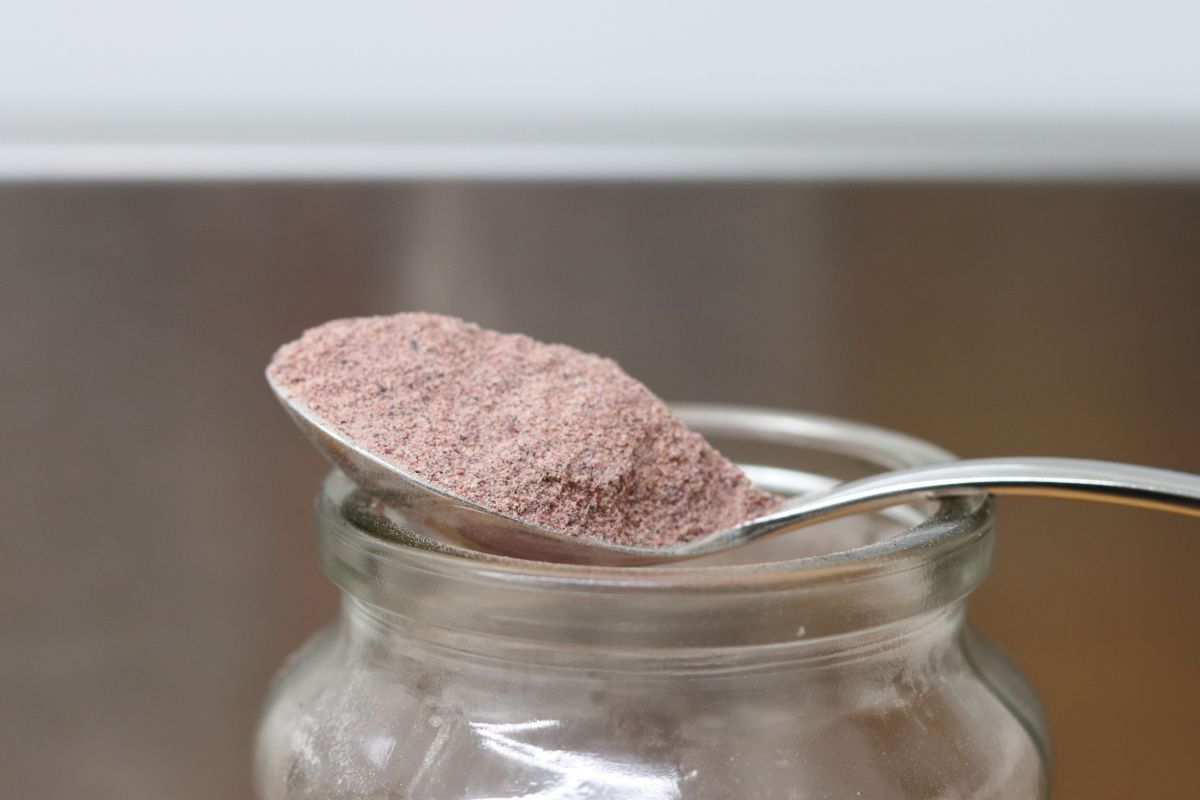
When we think of plums, we tend to think sweet. Plum jam, plum crumble, cakes, desserts… chutneys perhaps, but generally there’s sugar involved somewhere. But dehydrated plum powder can be surprisingly tart and savoury.
Dehydration removes the water and concentrates everything that’s left behind — including the flavour and natural acidity of the fruit. Depending on the variety and ripeness of the plums you started with, your finished powder can have quite a punch.
So rather than trying to turn mine back into something sweet, I decided to lean into that tartness. And make a seasoning.
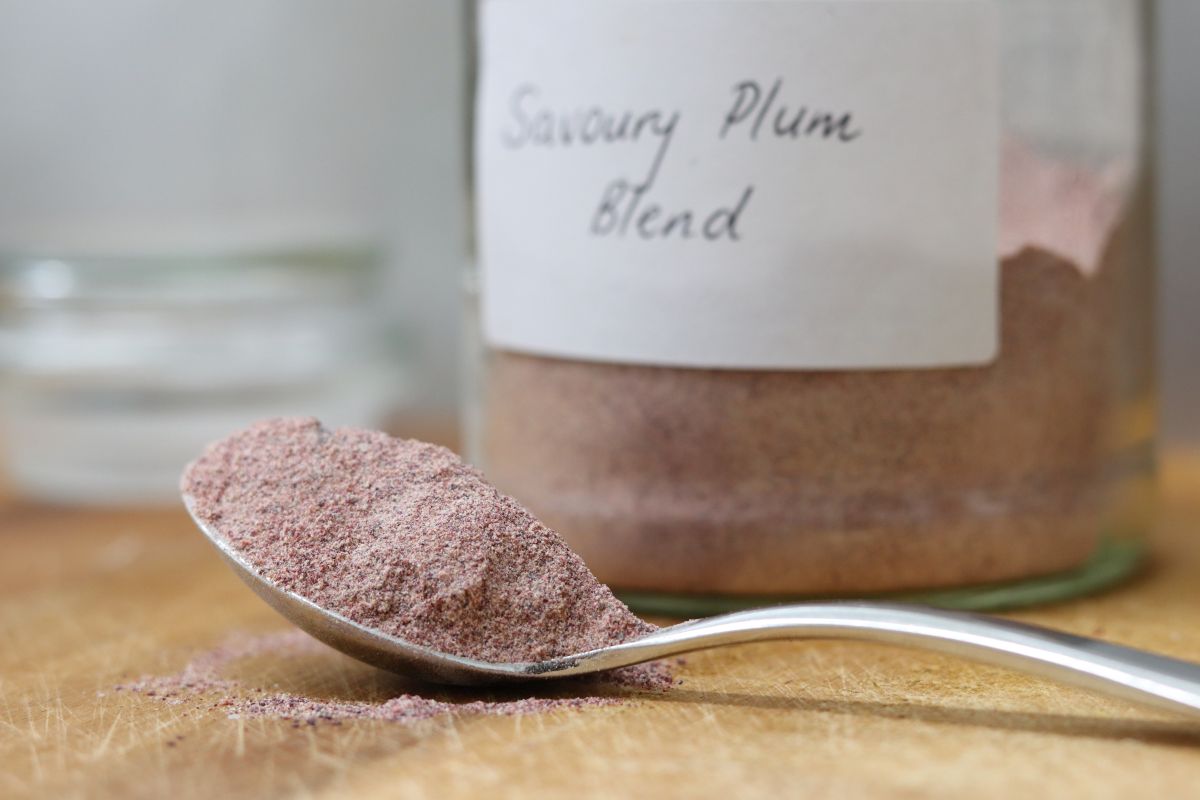
Savoury Plum Seasoning
Ingredients
- 4 Tbsp dehydrated plum powder
- 2 Tbsp onion powder
- 1 Tbsp garlic powder
- 1 Tbsp smoked paprika
- 2 tsp mustard powder
- 2 tsp ground ginger
- 1 tsp freshly ground black pepper
- 1 tsp flavoured salt, or salt to taste
- ½–1 tsp chilli flakes, optional
Method
- Add all the ingredients to a bowl and mix thoroughly.
- Transfer to a clean, completely dry airtight jar and store in a cool, dark pantry.
As with any homemade powder blend, moisture is the enemy, so always use a clean, dry spoon when dipping into the jar.
Why These Flavours Work
Plum is doing something quite different here from what you might expect. Rather than making the seasoning obviously fruity, it brings tartness, acidity and depth.
The onion and garlic provide the savoury backbone. Smoked paprika adds warmth and smokiness, mustard gives it a little bite, and ginger works beautifully with the natural fruitiness of the plum without sending the whole thing into dessert territory.
Black pepper adds warmth, while chilli can take it a step further if that’s your thing.
But the wonderful thing about fruit and varieties is that your powder may be completely different from mine. The variety of plum, how ripe it was when picked and even how concentrated the finished powder is can affect the flavour.
Use this recipe as a starting point rather than a hard-and-fast rule. If it needs more salt, add it. If you’d like more warmth, increase the ginger or paprika. And if your plums are exceptionally tart, you could even add a small amount of brown sugar to balance them.
That’s the beauty of making your own seasoning. You get to make it taste like yours.
How to Use Savoury Plum Seasoning
As a starting point, try around 1 tablespoon of seasoning per 500g of meat. It works particularly well with pork and chicken… but be liberal! A fine sprinkling probably won’t give you a plummy outcome. Remember that this is seasoning, but doesn’t replace the regular salt that you may use for meats or vegetables. The seasoning is the ‘icing on top’ for extra flavour.
- Plum yoghurt dip: Greek yoghurt + plum seasoning + a squeeze of lemon/lime or drizzle of honey if needed. Great with crackers, vegetable sticks, kūmara wedges or falafel.
- Creamy roast vegetable dressing: Mix the seasoning with mayonnaise, or half mayo/half Greek yoghurt. Particularly good with roasted pumpkin, kūmara, beetroot, carrot and red onion.
- Plum vinaigrette: Plum seasoning + olive oil + vinegar + a touch of honey. The tart plum becomes part of the acidity rather than having to carry the whole flavour.
- Roast vegetable seasoning: Toss directly with pumpkin, kūmara, carrots or beetroot plus oil before roasting. These naturally sweeter vegetables should give the plum more contrast than chicken did.
- Plum hummus: Stir a teaspoon or two into a homemade chickpea dip. The chickpeas provide a neutral base that should let the tartness come through.
- Plum Glaze: For a quick rub or paste, combine: 1 Tbsp plum seasoning + 1 Tbsp oil. Add a teaspoon or two of water if you want a looser consistency. For a sweeter, stickier glaze, add a little honey or brown sugar.
- Cream cheese spread: Mix into cream cheese or cottage cheese for crackers or sandwiches. Again, a creamy base gives the powder somewhere to go.
- Breadcrumb coating: Add it to breadcrumbs for chicken, pork, crumbed kūmara or cauliflower. I’d boost this version with extra salt and smoked paprika if your original blend is mild.
Stop Collecting Powders. Start Using Them.
This is really the bigger experiment for me. If you dehydrate regularly, it can become incredibly easy to accumulate jars of powders. They look gorgeous lined up in the pantry, but they’re much more useful when they’re actually finding their way back into our food. And we don’t necessarily have to use them in the obvious way.
Beetroot powder doesn’t have to wait for a smoothie. Green powder doesn’t have to disappear into soup. Tomato powder doesn’t only have to be reconstituted into tomato paste. And fruit powders don’t have to be reserved for baking.
Plum powder is a great example. Fresh plums may have started as something I’d eat straight from the tree or preserve when there were too many to get through. Now those same plums have become a concentrated, shelf-stable ingredient that I can reach for whenever I want to add tartness and flavour to something savoury. That’s the part of dehydrating I really love. It’s not simply about making food last longer. It’s about turning what you have into something useful.
I’ve done lime. I’ve done my KFC-esque seasoning. Now I’ve tackled plum.
The question is… what powder should I put to work next?