There’s nothing wrong with the traditional cauliflower, but when I discovered a tray of i-Stem cauliflower seedlings on ‘the specials’ rack at my local hardware store, I thought I’d give it a go. And I’m glad I did!
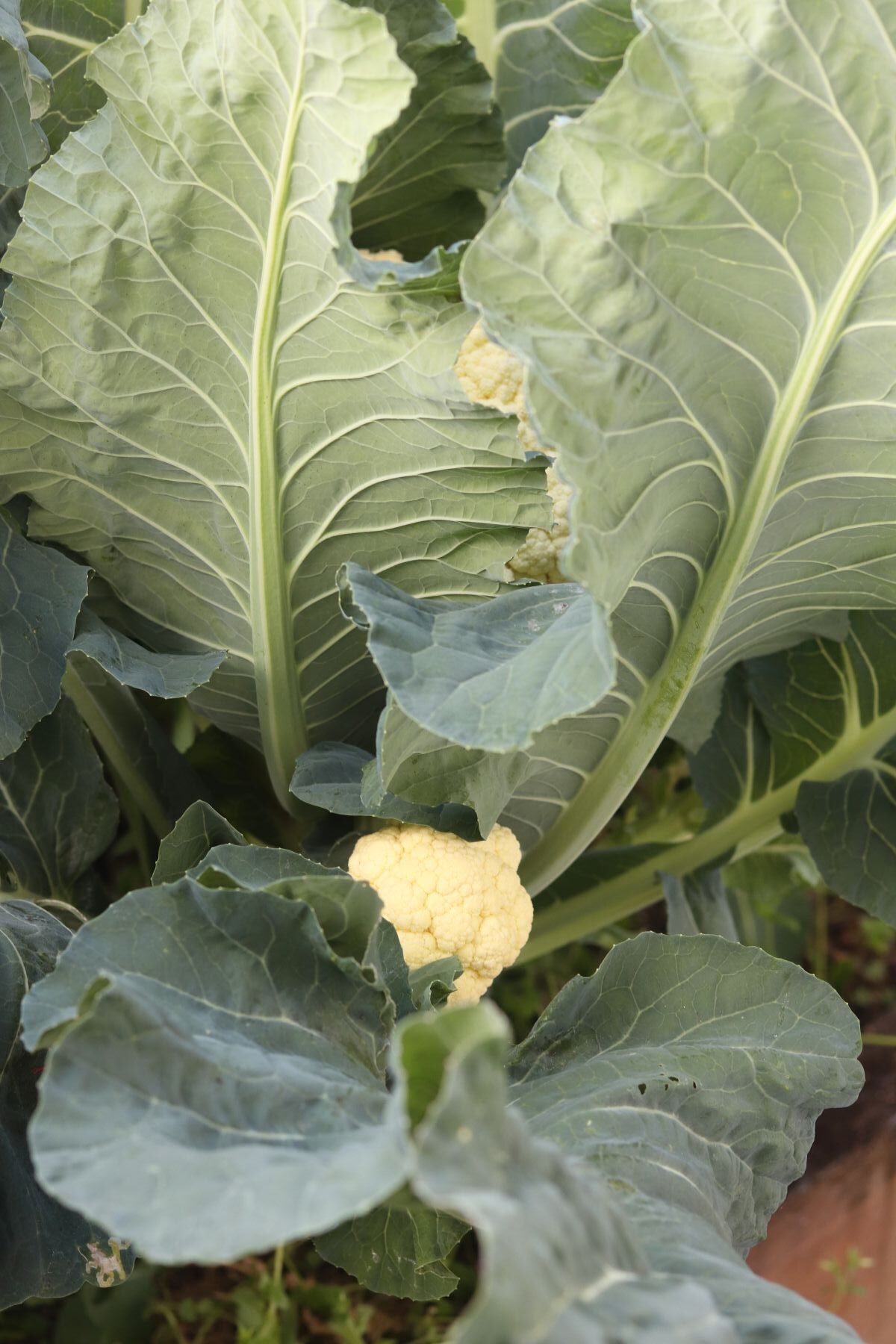
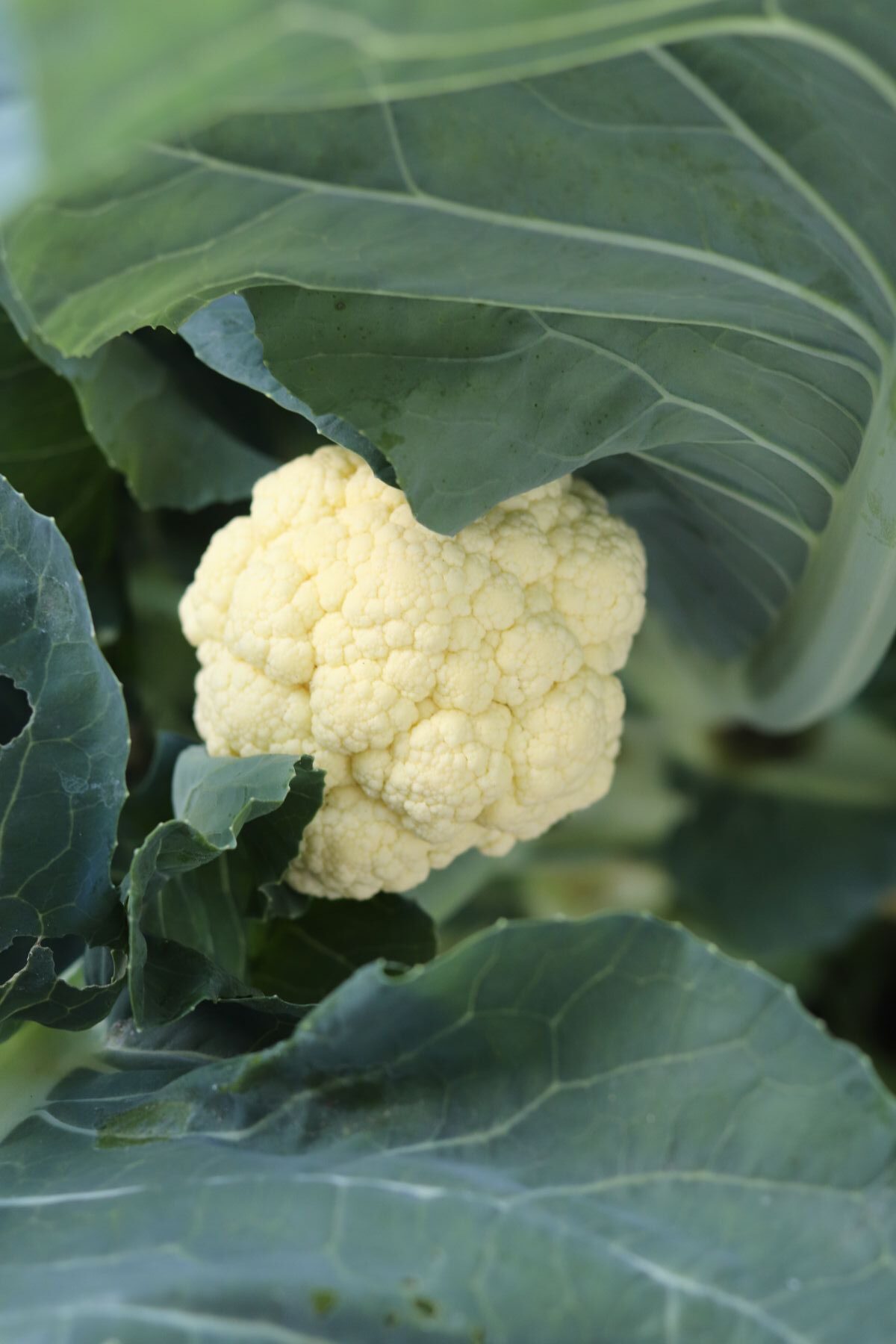
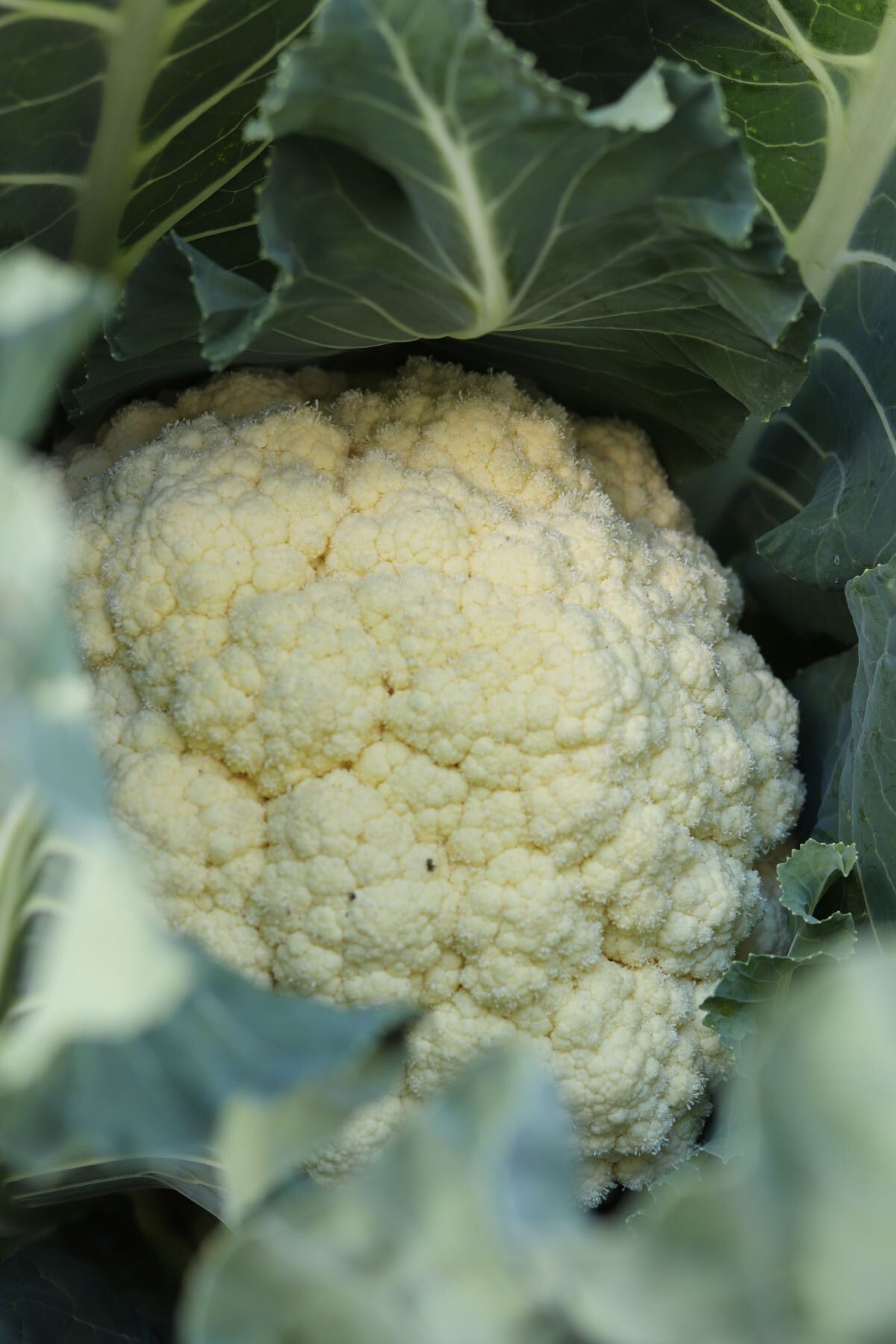
If you’ve never heard of i-Stem cauliflower, imagine a regular cauliflower that’s decided to go rogue. Rather than producing one enormous, tightly packed white head, it’s known for its smaller florets and long, tender stems. Well, that’s the theory anyway. Mine decided to grow rather impressive central cauliflower heads, not too dissimilar to a regular cauli, surrounded by multiple smaller flowering stems protruding from the plant.
Set and Forget (Almost!)
Buying i-Stem seedlings was a bit left-field for me. I’m usually a ‘plant from seed’ girl but I couldn’t resist a bargain. Perhaps they were growing too big for their seedling punnets, I don’t know. Early-winter I planted them out straight away in a sunny patch of garden, gave them a good watering to help them bed in, and pretty much left them to get on with it.
Like other brassicas, i-Stem cauliflowers enjoy fertile, well-drained soil and plenty of sunshine. But one thing it does appreciate is water, and lots of it! Winter provided enough to do most of the work for me.
In New Zealand, cauliflower is generally happiest growing through the cooler months. Autumn and early spring are good times to get started, although exactly when will depend on where you live and your local climate. Other than that, they’re relatively straightforward. Until, of course, the aphids arrive.
Aphids! Uninvited Dinner Guests
Ah yes, aphids. Those tiny little sap-sucking freeloaders that seem to appear out of nowhere and invite their entire extended family along for the feast. My i-Stem cauliflower wasn’t immune to their attention. In fact, their leaves became quite a popular gathering spot.
I wasn’t particularly keen on reaching for a heavy-duty insecticide, so I decided to tackle the problem with a little soapy water and some hands-on persuasion. I mixed a small amount of dishwashing liquid into water, sprayed the affected leaves, and gently massaged the aphids off with my fingers. It worked a treat! A little word of caution, though. Dishwashing liquid isn’t formulated for plants, and some varieties can damage foliage, particularly in strong sunlight. I rinsed the leaves thoroughly afterwards to remove the soap residue, as leaving it on may cause leaf burn.
It’s also worth checking underneath the leaves regularly. Aphids are rather good at hiding where you can’t immediately see them.
Once the aphids were dealt with, my cauliflower continued growing happily.
One Central Cauli and a Bunch of Little Ones
What I found particularly interesting was how the plant developed. Mine grew one central cauliflower head, with multiple smaller stems emerging around it. Depending on the particular variety and growing conditions, sprouting cauliflower can develop differently, and some plants may produce a more dominant central head than others.
The beauty of i-Stem is that the tender stems are edible too. No need to chop off all those lovely stalks and throw them into the compost.
I harvested mine while the florets were still firm and creamy white. Some varieties may produce a few additional shoots after the main harvest, although I wouldn’t count on an endless supply.
Cauliflower Curiosities
Cauliflower is actually a flower. Well, almost.
The part we eat is a mass of immature flowering tissue. If left to mature, it will eventually develop flowers. So technically, we’re eating the plant before it gets around to showing off its blooms.
Cauliflower and broccoli are relatives. Very close relatives.
In fact, cauliflower, broccoli, cabbage, kale, Brussels sprouts and kohlrabi are all cultivated forms of the same species, Brassica oleracea.
Talk about a family reunion! They look completely different, yet they’re all descended from the same wild cabbage species.
Not all cauliflowers are white.
You can grow purple, orange and green varieties too. Purple cauliflower gets its colour from anthocyanins, the same group of pigments found in blueberries and red cabbage. And then there’s Romanesco, with its extraordinary lime-green spirals. It looks like something from another planet, or perhaps a mathematician’s dream.
Why are traditional cauliflowers so white?
Many conventional varieties have large leaves that naturally curl around the developing head, protecting it from sunlight. Gardeners sometimes tie the leaves over the head themselves, a practice known as blanching, to help keep it pale.
And no, that doesn’t mean plunging it into boiling water!
From Garden to Dinner Plate
One of the things I love about i-Stem cauliflower is how little preparation it needs. The smaller stems can be cooked whole, and the florets don’t require nearly as much chopping as a conventional cauliflower. A quick stir-fry, a little steaming, or roasting with olive oil, salt and pepper is all that’s needed.
My favourite (and super easy) way to serve is to toss steamed cauliflower florets with a spoonful of mayonnaise, a sprinkling of curry powder and a dash of mustard powder, then season with salt and pepper. Yum!
You can also blanch and freeze any surplus, which is handy if several plants decide to mature at once. As with regular cauliflower, the texture will soften after freezing, but it’s still perfect for cooked dishes.
For sure, cauliflower can be pickled in a brine, but as a stand-alone vegetable it’s not safe for water bathing or pressure canning. There are HEAPS of delicious recipes with cauliflower (which you can find here on my blog… just click on the #cauli hashtag below) or fast forward to last night’s dinner Cheesy Cauliflower Pizza Base!