“Yum, just like Christmas!” was the response when my Englishman spotted me photographing these candied citrus.
I have a mental block when it comes to glace cherries, hunks of candied ginger or Turkish Delight. But, when candied fruit is (a) homegrown and (b) homemade with patience and love, it presents itself as a moreish offering and a distant cry from plastic packaged goods that have been imported from who-knows-where.
I may just be turning a corner! What’s there not to love about homegrown and homemade candied citrus!?
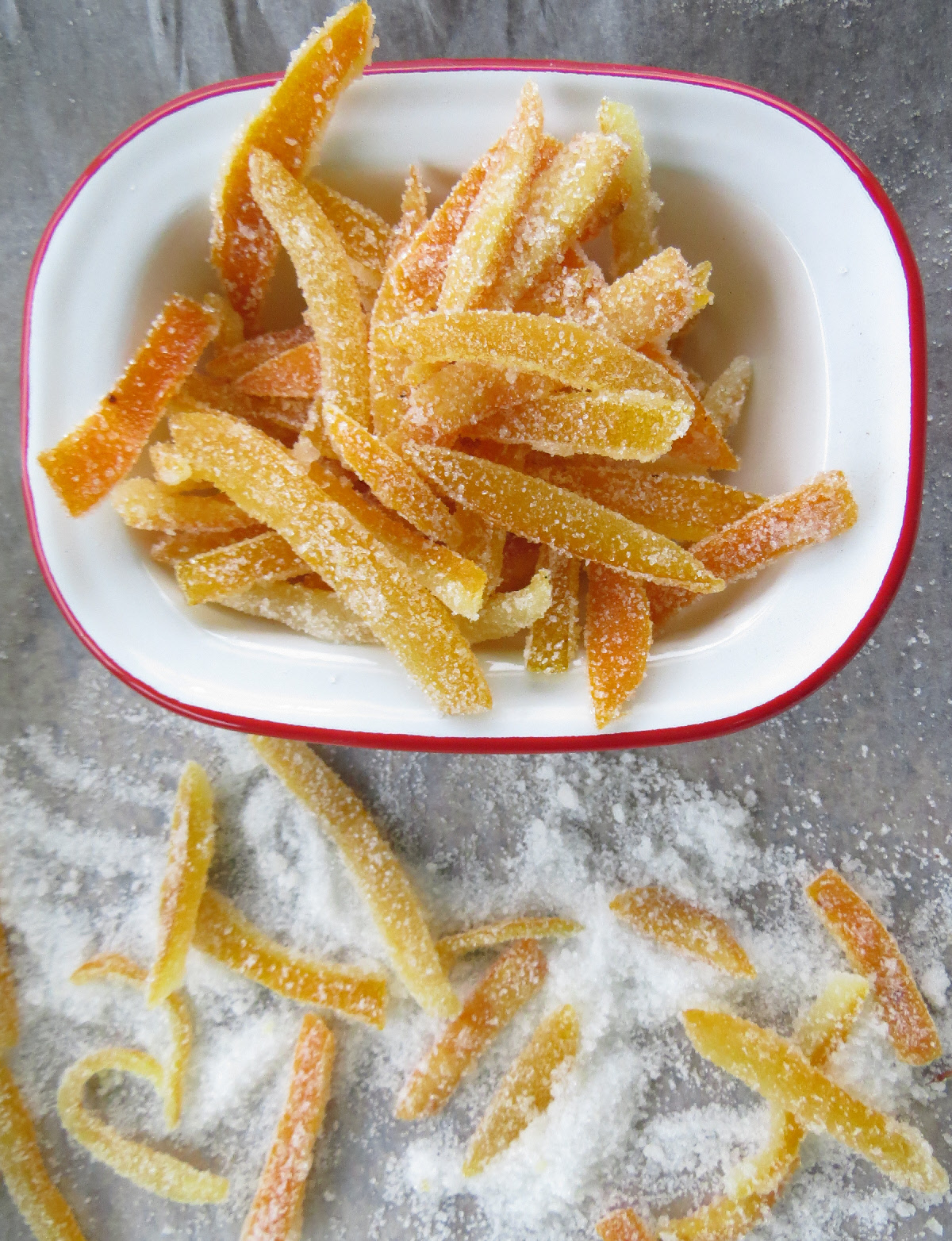 What brought me great delight was to use ALL types of backyard citrus that is so prevalent at this time of year: grapefruit, orange, mandarin and lemon. There are no hard and fast rules for this recipe. I had squeezed a lot of juice by hand (the fruit is so ripe it is hardly a hard task) and had plenty of peel left over. With a successful brew of Orange Vinegar – DIY Cleaner already under my belt, I wanted to try something different with my citrus rinds.
Wash your fruit
Whether peeling citrus or using it whole, it is recommended that you scrub it first. Even home-grown citrus would benefit from a wash before use, as garden fertilisers whether directly applied to the soil or foliage, or even residue may drift onto fruit from other parts of the garden. If using store bought fruit, the odds are there may be a filmy wax applied to all fruit (including the likes of apples too) to help with its shelf life. A good scrub and a rub will remove any residue.
What do you do with Candied Citrus?
- Enjoy as a sweet snack
- Cut finely, or leave in strands to adorn baking or desserts
- Get decedent and dip the ends in melted dark chocolate
- Package up for a delicious looking homemade gift
The great thing about this method is that you can use as little or as much peel as you choose! You only need to measure the water nearing the end, and work out how much sugar to add to create the syrup.
The result is a succulent candied citrus – certainly not dehydrated, rather like fruit jubes!
Here’s how:


 Candied Citrus Peel
Ingredients
- as much citrus peel as you can handle
- water
- white sugar
Method
- Cut the pre-squeezed fruit into small wedges, then cut out the flesh*. Once you have a pliable peel, cut into thin slithers. *Flatten the skin, flesh facing up. Using a vegetable knife, slide the blade between the skin and the flesh, running it flat. It will remove any remnants of flesh and may pick up some white pith along the way, but that’s okay. It’s easier to do this when the citrus is cut into smaller wedges than try to navigate your knifing skills on a quarter piece. The trick is being able to bend the peel flat, the rest is easy.
- Fill a saucepan of cold water and add the peel. Bring to a simmer and cook for 5 minutes. Drain. Repeat the simmering process (it helps extract some of the bitterness from the rind) although this time just cover the peel by a few centimetres with cold water, cover, then simmer for 30 minutes.
- After taking from the heat, drain – reserving the water. Measure the water. For every 100ml of water add 100g of sugar. Add the cooking water with sugar and heat gently in a saucepan, stirring as you go to dissolve the sugar. Add peel and simmer for 30 minutes until the peel is soft and becomes translucent (but still holding its form).
- Take from heat and allow the peel and the sugary syrup to cool. Preheat the oven on a low 50°C. Using a slotted spoon or fork, arrange the peel slithers in a single layer on a rack suspended over an oven tray lined with baking paper, to catch any drips. Put in the oven and dry for 60 minutes.
- Remove from the oven. Sprinkle sugar onto a baking paper lined tray, allow each citrus slither to be rolled in a sugar dusting, then spread out to dry naturally for around an hour.
- Devour immediately or pack into an airtight container, where it will live happily for 4-6 weeks.
Enjoy!