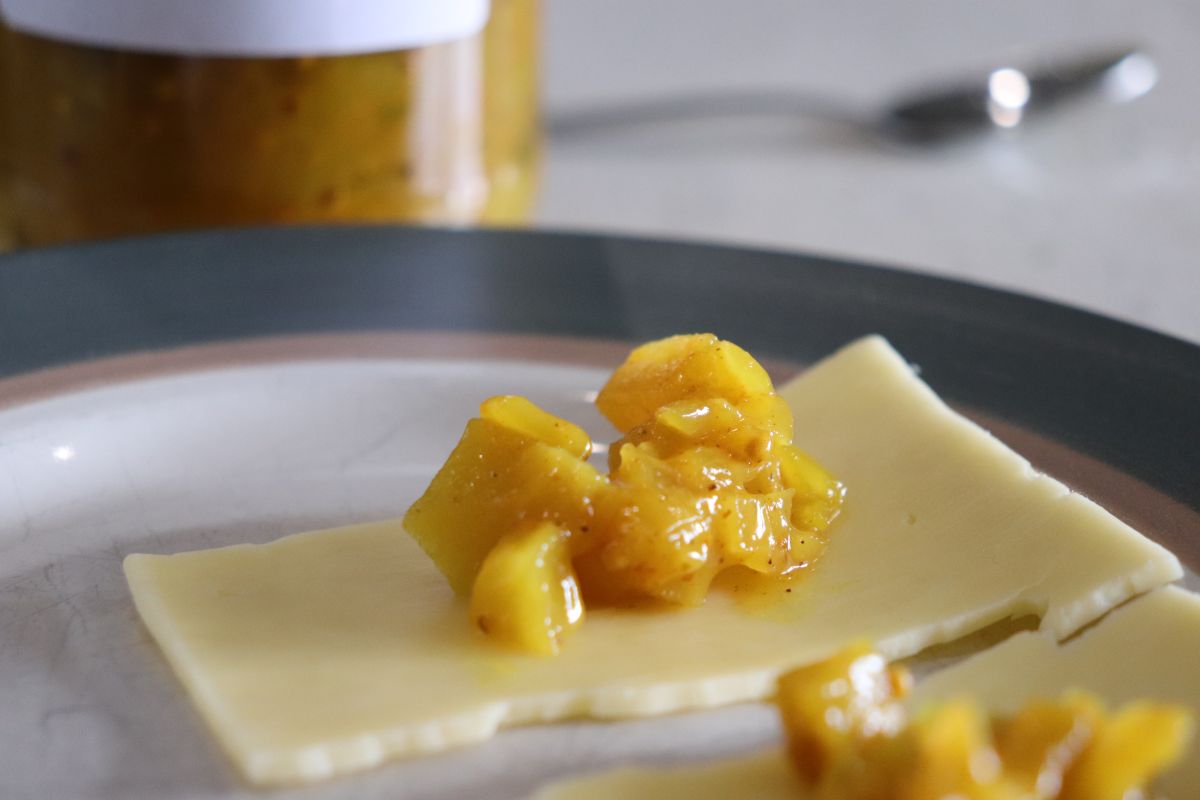
When it comes to choko season you’ll be looking for 101 different ways to use them. Turning choko into jars of rich, spicy, sweet pickle that will sit in the pantry waiting to spring to use in months to come, should be on your list.
Choko are one of those vegetables that people either grew up with or stare at suspiciously wondering what on earth to do with them. They’re prolific, slightly odd-looking, and if you’ve got a vine, you’ll know they don’t believe in moderation. One plant can suddenly become a mountain of chokos before you’ve even figured out what to do with the first few.
That’s where pickle comes in. And the beauty of this recipe is that it works beautifully with either fresh chokos or frozen ones. So if your garden exploded months ago and you thoughtfully froze bags of chopped choko “for later” — congratulations, later has arrived.
One very important note though: peel them first.
Yes, it’s fiddly. Yes, it’s mildly annoying. Yes, your fingers may question your life choices halfway through. But removing that outer skin is essential. If you don’t, the pickle can end up with an unpleasant fibrous texture that you’ll literally be spitting out later (eek). It’s worth the effort.
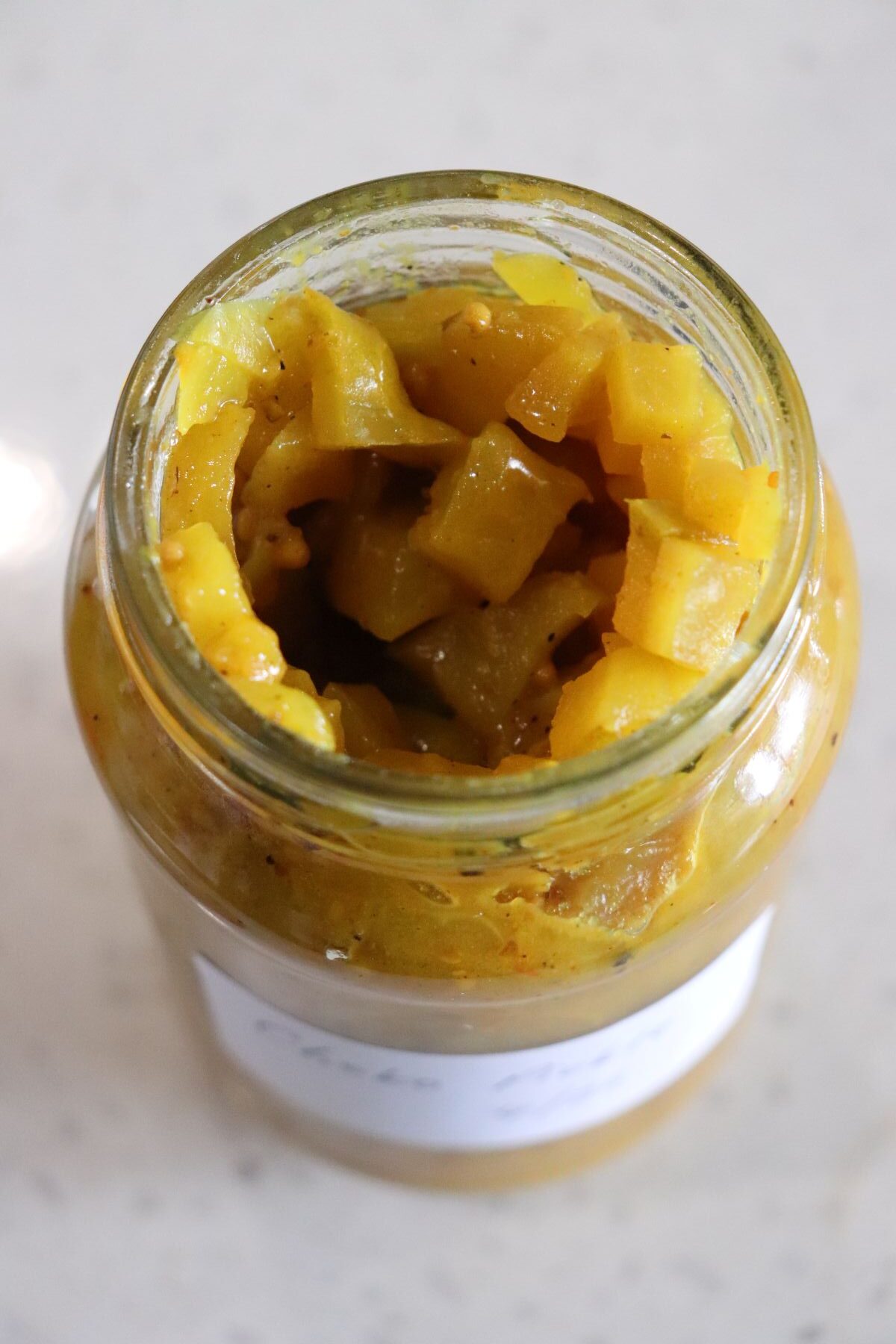
Once peeled, cored and chopped, the choko become the perfect blank canvas for all those warm chutney flavours – mustard, curry, turmeric, chilli and vinegar. They soak the flavours up beautifully.
A Quick Word About Peeling Choko
If you’ve never prepared choko before, here’s the part where many people briefly reconsider the entire recipe.
Peeling choko is a little fiddly — not difficult exactly, just slippery. Once the skin starts coming off, the flesh can become surprisingly slimy to handle, which makes the whole process feel a bit like trying to peel a bar of soap that’s fighting back. Still, it’s absolutely worth doing properly because that outer skin really does need to come off. Leaving it on can create a fibrous texture in the finished pickle, and no one wants chewy strings in their chutney.
A couple of methods make the job much easier:
Method One: Tea Towel Grip
Hold the choko in a tea towel with one hand while using a vegetable peeler in the other. The tea towel gives you a much firmer grip and stops the choko sliding around your hand like an escaped fish. It also saves you from constantly washing sticky sap off your fingers.
Method Two: Slice First
You’ll need to remove the centre seed regardless, so alternatively, cut the choko into slices first (removing the centre seed as you go), then run a vegetable knife around the outside edge of each slice to remove the skin. Some people find this method easier because the pieces are more stable and manageable once cut.
Whichever approach you use, just know that everyone who has ever made choko pickle has probably muttered at least once during the peeling stage. It’s part of the tradition.
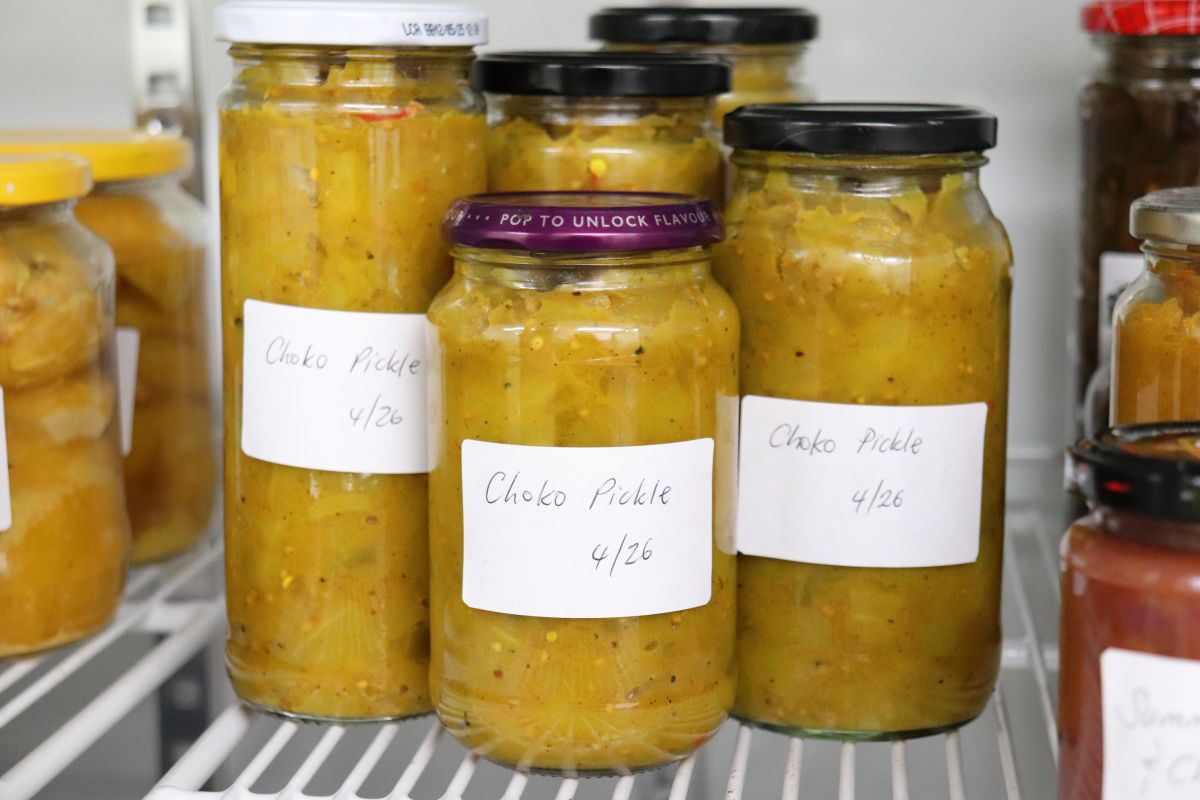
Choko Pickle
Makes: approx 2 litres
Ingredients
- 2kg choko, peeled, cored and finely chopped
- 4 large brown onions, finely chopped
- 1/4 cup salt
- 1 Tbsp curry powder
- 1 Tbsp mustard powder
- 1 Tbsp mustard seeds
- 1 tsp ground black pepper
- 1 tsp ground turmeric
- 1 capsicum, finely chopped
- 2 cups white sugar
- 2 cups apple cider vinegar (or white vinegar)
- 4 chilli, finely chopped
- 1 Tbsp cornflour
Method
- Combine the chopped choko, onion and salt in a large bowl. Leave it to stand for about two hours. This step helps draw out excess moisture and improves the final texture.
- After two hours, rinse thoroughly and drain well. Squeeze out extra liquid with your hands and discard.
- Place the drained vegetables into a large saucepan along with the curry powder, mustard powder, mustard seeds, pepper, turmeric, capsicum, sugar, vinegar and chilli.
- Stir over high heat until the sugar dissolves — don’t let it boil during this stage.
- Once dissolved, bring everything to the boil, then reduce the heat and simmer uncovered for around 45-60 minutes, stirring occasionally, until reduced slightly.
- Scoop out some of the liquid from the pot and mix with cornflour until smooth, then stir it back into the pickle. The mix won’t thicken well without it! Stir it into the pickle and simmer for another five minutes until the mixture thickens nicely.
- Spoon hot pickle into hot sterilised jars and seal immediately.
Like most chutneys and pickles, this gets better with time. The flavours mellow, deepen and become richer after a few weeks in the jar. And suddenly that wildly over-enthusiastic choko vine feels less like a burden and more like a gift. Almost.