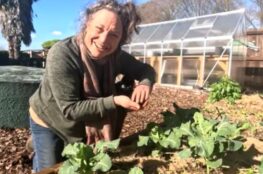
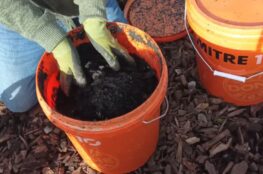
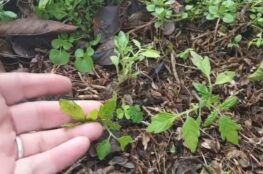
There’s a point where bark stops being bark. What starts out as a tidy weed-suppressing layer slowly transforms over the years into something else entirely… rich, dark soil. Which is fantastic for the garden… but not so fantastic when it’s sitting on top of your weed mat.
Our bark garden surrounds our raised vegetable beds and has been there for around ten years, with a fresh top-up added about five years ago (and maybe, just maybe a bit of mulch throw in there to boot). In recent years the weeds had started pushing through everywhere and, honestly, it was no mystery why. Beneath the remaining bark was several inches of beautifully decomposed organic matter. The weed mat itself was buried under what had essentially become premium garden soil.
Simply throwing more bark on top wasn’t going to solve the problem. It would only bury the issue deeper and create an even thicker layer for weeds to grow in later.
So… we decided it was time to give the whole area some love.
A Homemade Bark-Sifting System
Buying new bark for a large garden area isn’t cheap, and it seemed wasteful to throw out perfectly usable bark just because part of it had broken down.
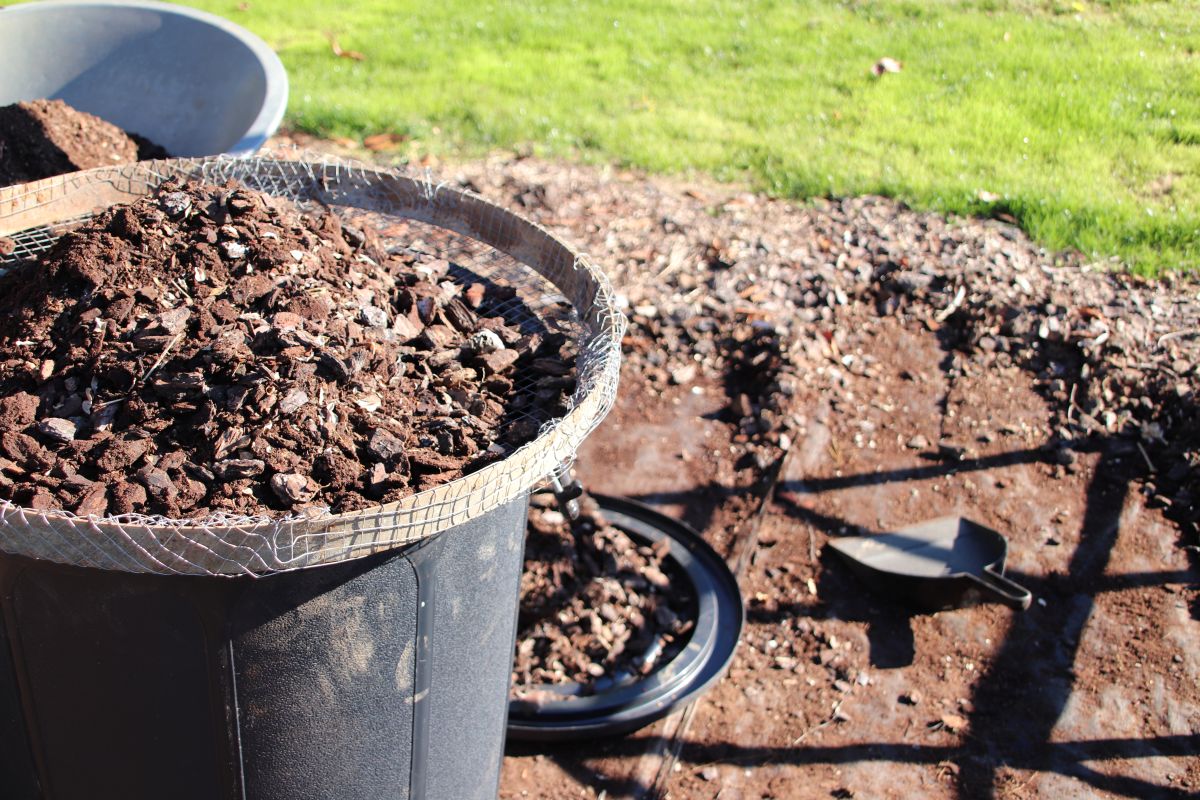
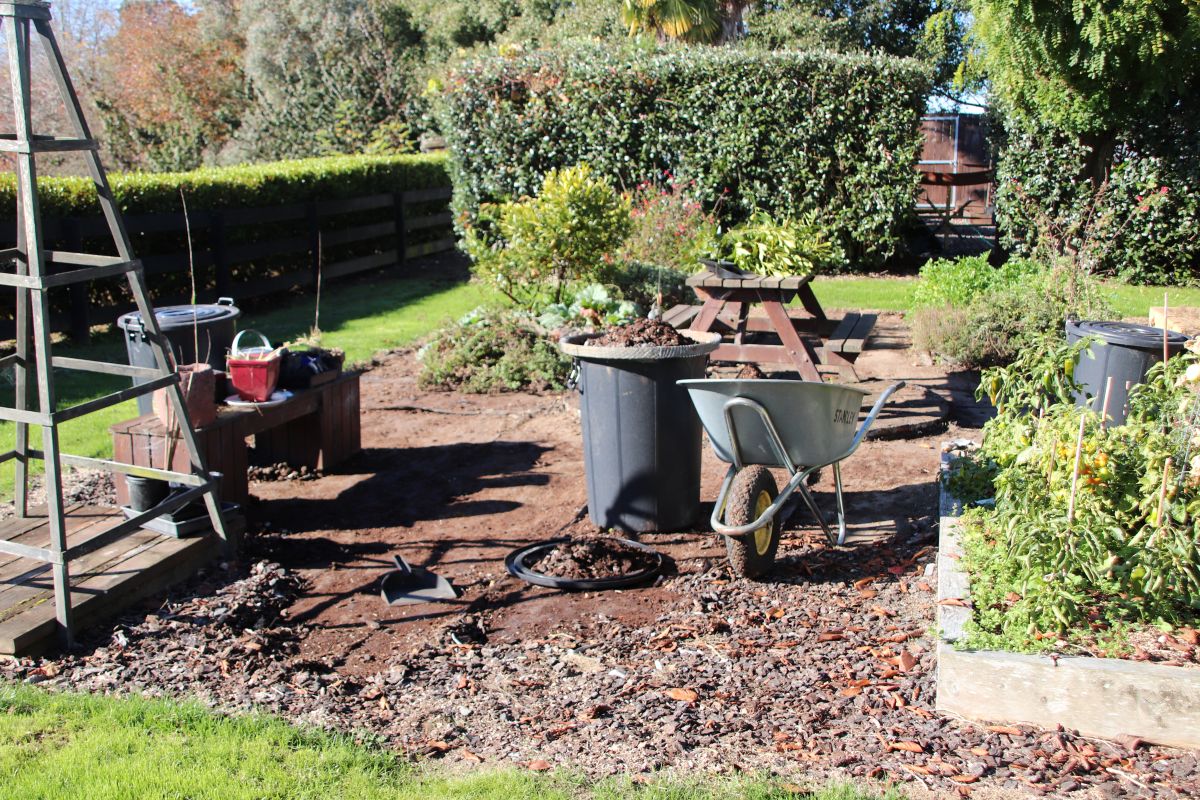
So we improvised. Using aviary netting wrapped around a metal ring salvaged from an old wine barrel, we created a giant homemade colander. Balanced over a large bin, it became our bark-recycling station.
And while “sifting” sounds delicate and graceful… this was definitely more of a workout. It wasn’t like sifting flour. It was more like massaging bark (or for a baking analogy, a little like rubbing butter into flour). By rubbing and working the bark through the mesh, the rich soil fell through into the bin below while the larger bark pieces remained behind, ready to be reused.
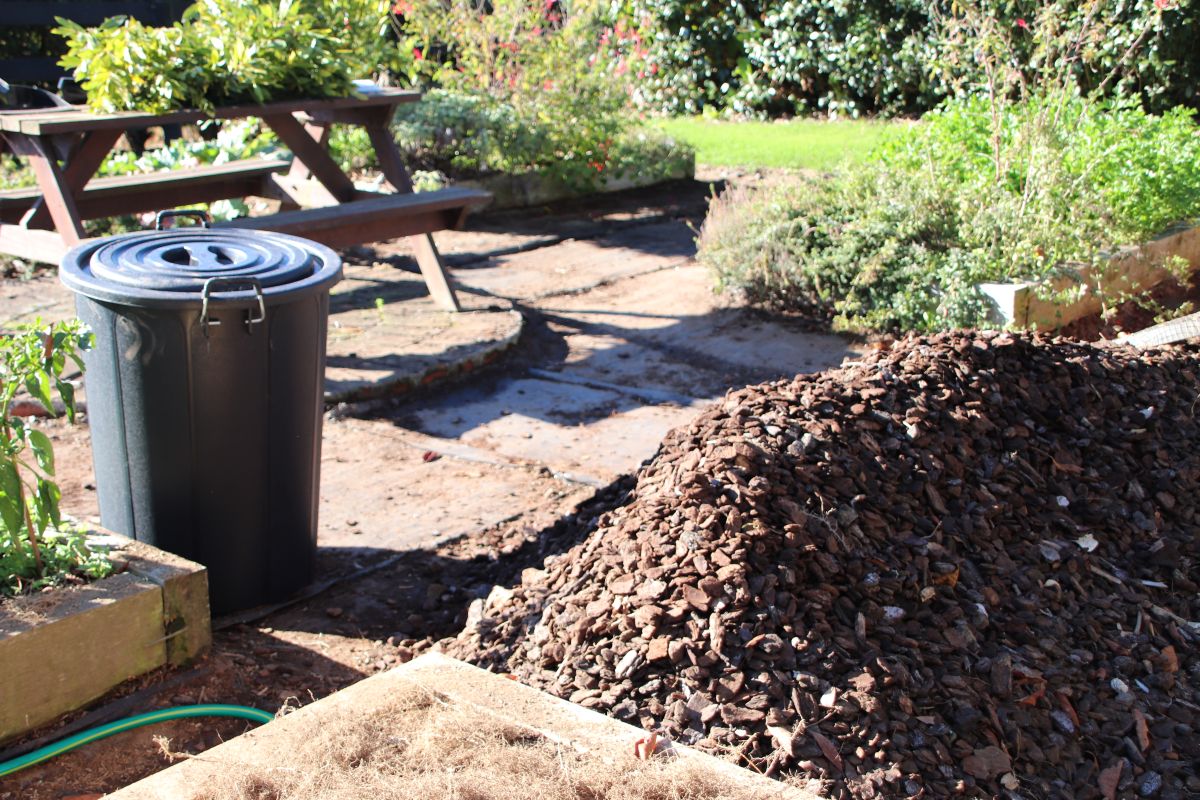
The reusable bark was piled aside to redistribute later once the weed mat had been uncovered and cleaned up. The weed mat itself needed a good brushing down to remove the thick layer of accumulated soil sitting on top of it. It was messy and dusty but oddly satisfying work.
Saving Moolah
What surprised us most was just how much usable bark we were recovering. We estimated we were salvaging around $15 worth of bark per wheelbarrow load. Over a large area, that adds up quickly. But this wasn’t just about saving money.
The process was necessary. Adding fresh bark on top of decomposed bark would have continued the cycle and done nothing to stop the weeds. Clearing back to the weed mat and separating the soil from the bark properly meant we could essentially reset the whole system.
And the bonus? The decomposed bark underneath was incredible soil. Rich, dark, crumbly, moisture-retaining garden goodness. Several inches of it had been hiding beneath the bark layer, waiting to be discovered.
Nothing Wasted
The reclaimed soil certainly wasn’t going to waste. Much of it was transferred directly into new garden beds, instantly boosting them with years of broken-down organic matter. The excess was stored in compost bays, ready for spring planting.
In the end, what started as a weed problem became a surprisingly productive garden project:
- Recycled bark ready to reuse
- Cleared and refreshed weed mat
- Rich homemade soil for the vegetable gardens
- Compost reserves for the coming season
- And a garden area that finally feels loved again
Sometimes the best gardening jobs are the ones that look like a problem at first. Because underneath ten years of old bark was something far more valuable than we expected.