Parsley: the herb that just keeps giving, right? Here’s how to harvest and maintain parsley in your garden, how to encourage (or stop) self seeding, and some parsley trivia.
Parsley is one of those plants that quietly gets on with the job. It grows happily in most gardens, and before you know it, you’ve got more of it than you know what to do with.
In fact, parsley has been cultivated for over 2,000 years, so it’s hardly surprising that it has become a staple in gardens around the world. Whether you’re growing curly leaf parsley or Italian flat leaf parsley, it’s one of the most useful herbs you can have close to the kitchen door.
One thing many people don’t realise is that parsley is actually a biennial plant. That means its natural lifespan is around two years. During its second year, it will usually produce a thick central flower stalk, set seed, and eventually complete its life cycle. If you’d rather keep harvesting leaves for longer, simply remove that central stalk as soon as you see it developing. Snip it off at the base and the plant will continue directing its energy into producing fresh leafy growth.
Interestingly, I’ve found that even when the centre has been removed, parsley often surprises me. New shoots can emerge from out the sides of the central ‘cut stalk’ over time, creating a whole new flush of growth from what appears to be the original root system.
The Right Way to Harvest Parsley
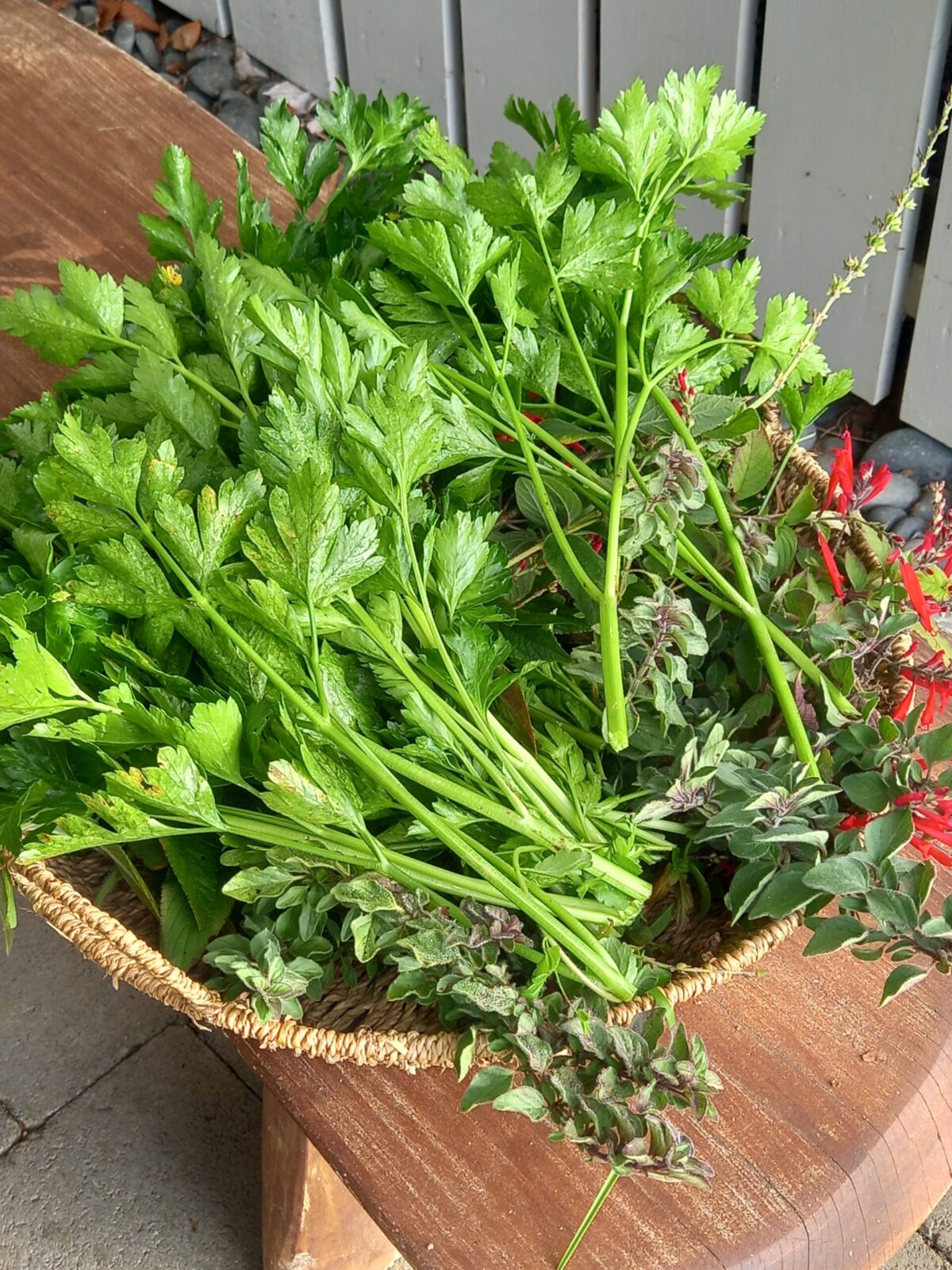
One of the most common mistakes people make is plucking individual leaves here and there. While it might seem harmless, it’s not the healthiest way to harvest. Instead, take entire stems from the outside of the plant. This allows the young growth in the centre to continue developing naturally.
A good rule is to never remove more than one-third of the plant at any one time. The remaining leaves continue gathering energy from the sun, keeping the plant healthy and productive. Harvesting from the outside in also encourages a fuller, more vigorous plant.
Don’t Waste the Stems
Parsley is packed with vitamins and flavour, but don’t stop at the leaves. The stems are perfectly edible too. They have a slightly stronger flavour, making them ideal for soups, casseroles, stocks and sauces (although the extra-woody stems may be a little fibrous).
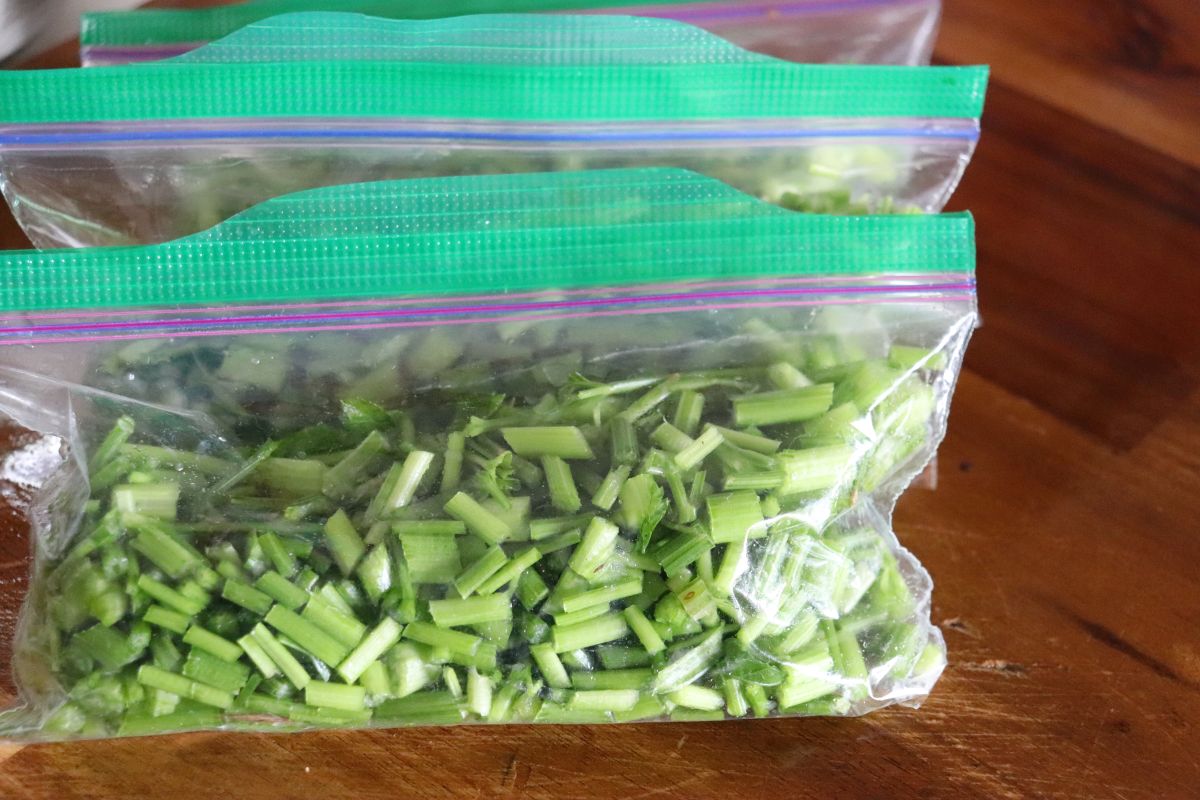
Throughout the year I regularly snip parsley from the garden. Any leaves I don’t use fresh are dehydrated and added to my homemade mixed herb blend. The stems get chopped and frozen, ready to be tossed into winter soups and slow-cooked meals.
Nothing goes to waste.
To Seed or Not to Seed?
If you’re growing parsley from seed, patience is essential. Unlike lettuce or rocket, which can pop up within a week or two, parsley likes to take its time. Germination can take anywhere from four to eight weeks, depending on conditions. It’s one of those plants that tests your patience, but once established, it’s worth the wait.
When parsley reaches its second year, you have a choice. You can remove the flower stalk and continue harvesting leaves for a little longer, or you can let nature take its course.
Allowing parsley to flower and set seed creates a tall, impressive stalk topped with delicate blooms. I am being kind! At times it can look very unruly once you have several planted seeded… up to you if you care about that or not! Once the seeds mature, they’ll scatter themselves around the garden.
Many of the parsley plants growing in my garden arrived this way. No planting required. The wind, birds and a bit of luck do all the hard work. And honestly, I don’t mind one bit. Parsley may not be the most glamorous herb in the garden, but it’s certainly one of the most useful.
Harvest from the outside, leave the centre growth alone, avoid taking more than a third of the plant at a time, and decide whether you want to extend its life or let it reseed itself naturally.
Look after your parsley plants and they’ll reward you with fresh herbs for months on end, plus plenty of future generations if you let them go to seed.
Not bad for a humble little herb.