What colour are limes? “Green,” you’ll probably say. We’ve all grown up believing that limes are green.
That’s what we see in the supermarket. They’re green in cookbooks, green in cocktail recipes, green on social media and, after all, we even have a colour called lime green. But nature tells a slightly different story.
The colour we’ve been taught: Our idea of what a lime should look like has largely come from marketing. Supermarkets sell green limes because that’s what customers expect to see. Recipe books photograph bright green limes because they’re instantly recognisable. Over time we’ve come to associate green with “ripe”. But that’s not always how citrus works.
Think about a lemon tree. Young lemons begin life green before gradually turning bright yellow as they mature. Nobody looks at a green lemon and says, “That’s a ripe lemon.” We naturally think of lemons as yellow fruit.
Now walk over to a kaffir lime tree. You’ll see exactly the same process. The fruit starts off dark green, but as it matures it begins changing colour. Fully mature fruit develops a much more yellow appearance before eventually dropping from the tree.

So why don’t we think of ripe limes as yellow too? Even the colour “lime” isn’t really green. When you picture the colour lime, it isn’t actually dark green at all. It’s a much lighter green with a noticeable yellow tinge. In a funny sort of way, the colour itself is much closer to a ripening lime than the dark green fruit we expect to see on supermarket shelves.
Why do supermarkets sell green limes?
The answer is surprisingly practical. Limes are harvested while they’re still green because they need to survive packing, transport, storage and display. If growers waited until the fruit reached full maturity on the tree, there would be far less shelf life once it reached the supermarket.
As fruit begins to deteriorate, it also encourages the fruit around it to spoil more quickly. Anyone who’s had a bowl of fruit on the kitchen bench knows how one overripe piece can speed up the decline of the rest.
Yellow doesn’t mean overripe to the point of uselessness!
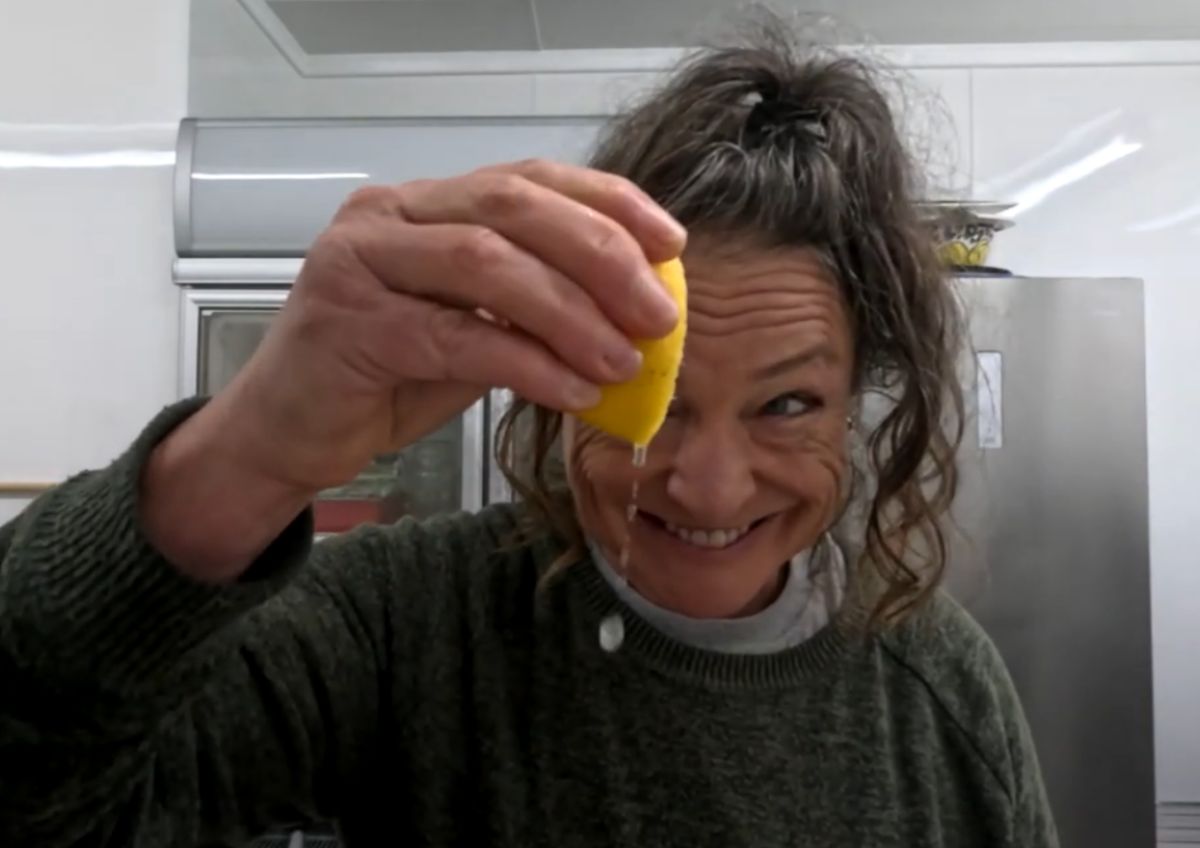
Recently I was processing a mountain of homegrown limes. I turned the zest into lime powder for baking and seasoning, preserved the juice and made a batch of lime cordial concentrate. A few people commented that the fruit couldn’t possibly be limes because they looked so much like lemons. They were confused. They were definitely limes.
The difference was simply that they had been allowed them to fully mature on the tree before harvesting… just as nature intended. A ripe lime feels quite different from a green one. It’s softer in your hand, noticeably heavier and absolutely packed with juice.
One thing that’s worth remembering is that lemons and limes don’t continue ripening once they’ve been picked. Unlike bananas or avocados, a lime won’t become sweeter or more mature sitting in your fruit bowl. Once it’s off the tree, that’s it. If you leave a harvested lime sitting around, it doesn’t continue ripening. Instead, it simply starts getting old. The skin wrinkles, becomes rough and leathery, and the fruit gradually loses moisture.
When I cut open one of my ripe yellow limes beside a lemon from the garden, they looked remarkably similar from the outside. Inside, though, there were obvious differences. The lemon had the familiar seeds and unmistakable lemon aroma. The ripe lime had no seeds, an incredible amount of juice and that distinctive lime fragrance that instantly tells you what it is. It may look like a lemon, but it certainly tastes like a lime.
So what colour is a ripe lime? The answer depends on where it’s growing, the variety and when it was picked. Many of the limes we buy are intentionally harvested green because that’s what the market expects. Left on the tree longer, many varieties naturally develop yellow colouring as they reach full maturity.
So the next time you see a yellow lime, don’t assume it’s the wrong fruit. It may simply be the ripest, juiciest lime you’ll ever squeeze.