I know. Canning water. It sounds like I may have finally run out of things to preserve but when you think about emergency water storage, it actually makes rather good sense.
We happily buy slabs of bottled water, shove them into a cupboard and call ourselves prepared. But if I already have preserving jars, a canner (in my case, a large pot with a lid) and perfectly good drinking water, why couldn’t I preserve my own?
Well, I can.
You’ll see me use the word “canning” here because that’s the terminology used by many of the US-based food-safety resources I’m referring to. Here in New Zealand, we’re much more likely to call putting food into jars preserving or bottling, while pressure canning specifically means processing jars under pressure at higher temperatures. And despite the name, home “canning” generally involves glass jars, not cans. So when I talk about canning water, think preserving water in jars.
How much emergency water do we need?
New Zealand Civil Defence recommends storing at least three litres of drinking water per person, per day, for at least three days – preferably more. That’s nine litres per person before we’ve considered extra water for cooking, washing or pets.
There are several ways to build that supply: commercially bottled water, water stored in suitable food-grade containers, or home-canned/preserved water. I’m particularly interested in the last one.
Yes, you can can water
The US National Center for Home Food Preservation (NCHFP) publishes a method specifically for canning drinking water.
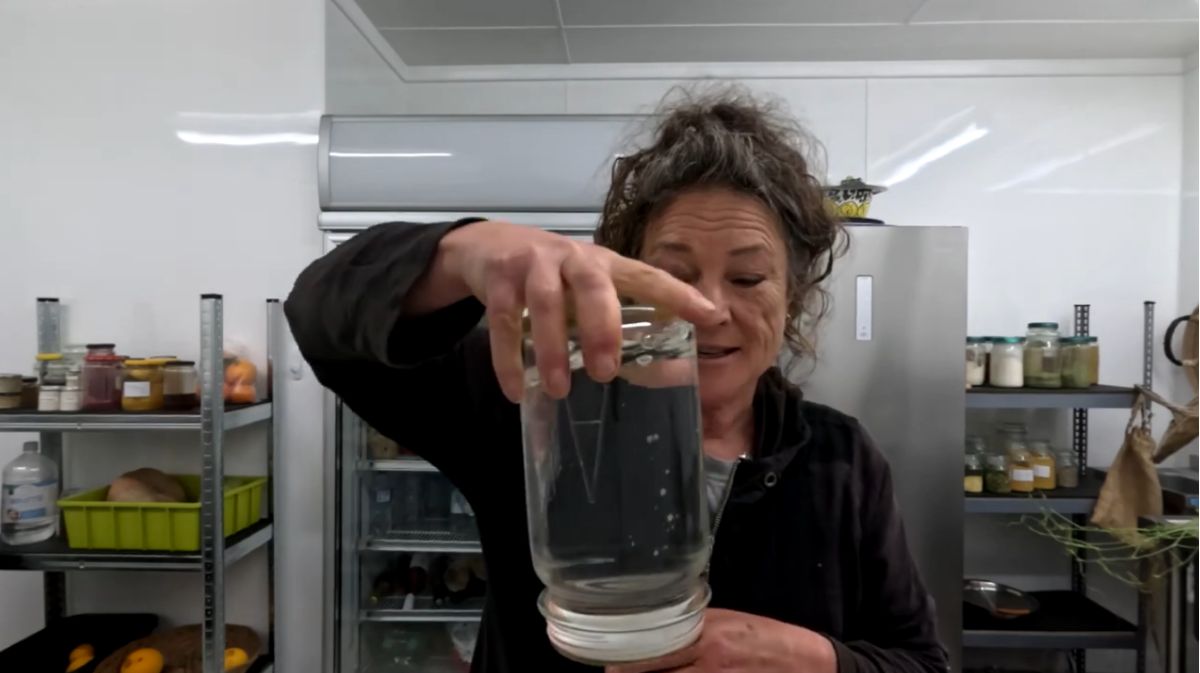
Start with potable water and boil it for five minutes. Fill clean, warm preserving jars with the boiling water, leaving about ½ inch (1.3 cm) headspace, apply the lids and process in a boiling-water canner. At 0–1,000 feet (0–305 metres) altitude, pints (approx 500ml) and quarts (approx 1000ml or 1 litre) are processed for 10 minutes, with longer processing at higher altitudes.
But isn’t water low-acid?
It is – which seems to break one of the golden rules of preserving:
High-acid foods = water bath.
Low-acid foods = pressure canner.
But we’re not canning food. The published NCHFP process specifically uses a boiling-water canner for potable water containing no added nutrients. They also make it clear that the process isn’t designed to destroy Clostridium botulinum spores. In other words, we’re preserving clean drinking water. We’re not scooping questionable water out of the duck pond, canning it and expecting miracles.
Pressure canning therefore doesn’t offer an obvious advantage here. Although I own a pressure canner, I’d simply use the big pot as a water-bath canner without pressurising it.
Why boil the water first if I’m about to boil it again?
This was my immediate question. Why can’t I put cold drinking water into cold jars, put those jars into a cold water bath, bring the whole lot up to the boil and process them for 10 minutes?
Physically, I can. The problem is that the published 10-minute processing time isn’t based on that method. When the water surrounding the jars reaches boiling point, the water in the centre of each jar hasn’t necessarily reached the same temperature yet. The official method removes that uncertainty by starting with water that’s already been boiled.
Think of it this way: the first boil treats the water; the water bath processes the filled and sealed jar.
 Why not just buy bottled water?
Commercially bottled water has one enormous advantage: convenience. Buy it. Store it. Done. It’s also lightweight and portable, which matters enormously in an emergency, but there are disadvantages.
Commercial bottled water comes in plastic packaging and carries a best-before or expiry date. Water itself doesn’t suddenly “go off” at midnight on that date, but storage conditions and the packaging matter. Plastic isn’t completely inert indefinitely. Heat and sunlight aren’t good storage companions, so bottled emergency water should be kept somewhere cool and dark and rotated according to the manufacturer’s recommendations. I certainly wouldn’t claim that older bottled water suddenly becomes toxic. But if I’m deliberately storing drinking water for the long haul, glass has appeal.
Then there’s the cost. If you don’t already preserve food, buying preserving jars and equipment just to store water probably makes very little financial sense, but I already have the gear. Compare that with repeatedly buying bottled water and replacing it over the years, and home-canned water becomes rather appealing. It also avoids bringing another collection of single-use plastic bottles onto the property unnecessarily.
Glass isn’t perfect either
There is, however, one fairly obvious problem with storing emergency water in glass, particularly in New Zealand… earthquakes. There’s something wonderfully ironic about carefully preserving litres of emergency drinking water only to have an earthquake throw the whole lot onto the floor. Glass is also heavy. If I need to grab emergency supplies and leave, I’d much rather carry plastic containers than a box of preserving jars. Which is why I don’t think this needs to be an either/or decision.
For me, a mixed approach makes much more sense. I’ll keep some properly canned water in glass jars on secure shelving. I’ll also keep water in appropriate food-grade plastic containers for something lighter and portable. Different storage methods also mean I’m not keeping my entire emergency water supply in one place or one type of container.
And there’s another reason I particularly like canning water.. empty preserving jars are wasted space. For part of the year my jars are full of preserves. At other times, they’re sitting on shelves containing nothing more useful than air. Why not store water in them?
When preserving season rolls around and I need those jars again, the water doesn’t need to be wasted. I can drink it, cook with it, fill the kettle or use it in the garden. Once empty jars begin accumulating again, I can replenish my emergency water supply.
I’m not suggesting we all become survivalists with 300 jars of water buried beneath the vegetable garden. It’s simply another way of doing what you can with what you have. And if the taps ever stop running, those apparently boring jars of water may suddenly look rather glorious.